Contact ATP

Phone: +852 2669 5126

Fax: +852 2669 5127

contact@atptree.com

Mailing Address:
26A Siu Hang San Tsuen
Fanling, NT
Hong Kong

Tree Risk Assessment

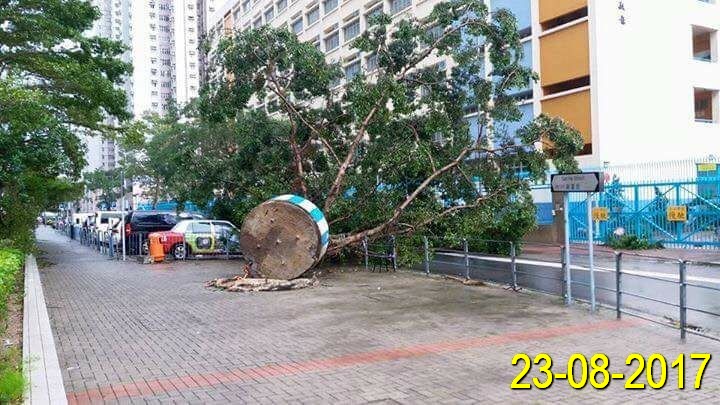
Trees are constantly growing and aging, and because their growth and deterioration is so slow, hazards and risks can easily develop unnoticed. Tree failure can result in costly damage to property and can lead to tragic human injury or even fatality.

What is tree risk assessment?

Tree risk assessment is the method employed by arborists for determining how much danger a specific tree poses to the property and humans around it. The danger posed by a tree is expressed by its risk rating, which takes three sets of data into consideration:

  • The likelihood that a tree or part of a tree will experience structural failure
  • The size of the tree portion that might fail
  • The property or people that are at risk, should tree failure occur

All of ATP’s certified arborists that perform tree risk assessments for our clients have attained tree risk assessment qualification (TRAQ), the highest global industry standard for this extremely important work.

Tree risk assessment methods

There are four primary methods for collecting the data necessary for tree risk assessments. These methods can be used in isolation or in combination with other methods depending on a particular tree’s circumstances – for trees in high-profile circumstances, all four methods may be used. These methods are

Ground inspection
This type of risk assessment is carried out by visual tree inspection at ground level.
Aerial inspection: This type of risk assessment involves ascending a tree with ropes or an aerial lift to inspect the tree’s crown.

Aerial inspection
Ascending a tree with ropes or an aerial lift to inspect the tree’s crown.

Trunk/limb inspection
When necessary, our qualified tree risk assessors utilise state-of-the-art tools such as the Rinntech Arbotom® sonic tomograph or Rinntech Resistograph® to “look” inside a tree’s trunk or limb and locate hidden decay and invisible cavities or cracks.

Root inspection
A tree can pose risks below the ground as well, and by using the Air-Spade® supersonic air jet digging tool we are able to remove dirt and even hard clay from around a tree’s roots, with no root damage or threat to underground cables. We can then visually inspect roots for structural issues and fungal pathogens. ATP also utilises ground-penetrating radar and Arboradix sonic tomography for locating roots. This is especially useful for pre-construction planning in close proximity to trees.

Why is tree risk assessment necessary?

In Hong Kong, tree risk assessments not only provide valuable information about the state of trees on a property, they are often required by law. Tree risk assessments are mandatory for all tree felling applications submitted to the Hong Kong Lands Department. Additionally, the Tree Management Office requires tree risk assessments for tree group inspections (Form 1) as well as old and valuable trees (OVT), stonewall trees and trees of more complex circumstances that require mitigation measures (Form 2).

ATP has extensive experience in assisting Hong Kong clients with attaining legal compliance for the trees on their properties. Contact us today to find out how we can help you ensure that your trees meet all relevant legal and regulatory requirements.


Asia Tree Perservation Ltd. (ATP) is incorporated in Hong Kong and also has an office in China. ATP services the Asian region.  This includes Hong Kong, China, Malaysia, Singapore, Taiwan, Thailand, Indonesia, Korea, Japan, India, Vietnam, The Philippines as well as other countries located in Southeast, South, and East Asia.